
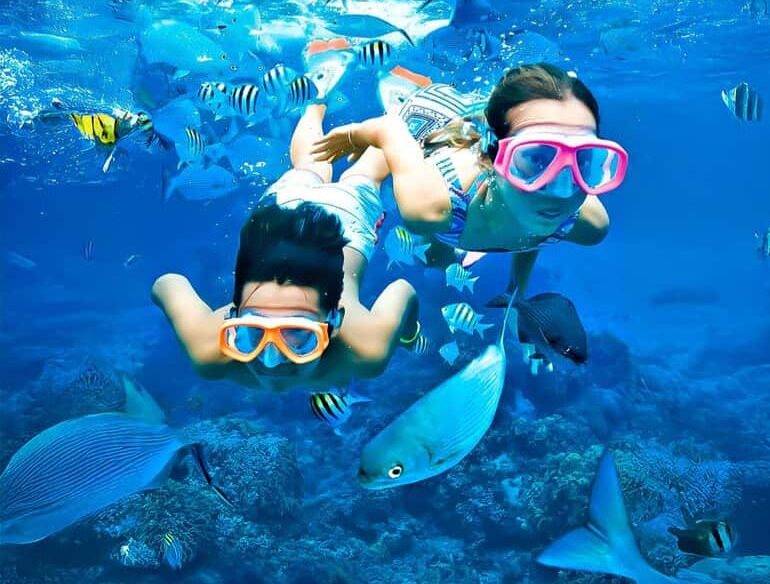
From colourful coral reefs and tropical fish to sea turtles and historic shipwrecks, Sri Lanka offers exciting opportunities to discover marine life through snorkelling and scuba diving. Whether you are a beginner who wants to try snorkelling for the first time or an experienced diver looking for a new adventure, the island has underwater experiences to explore.
The key is choosing the right destination for the season, checking sea conditions and travelling responsibly to protect the marine environment.

The surrounding waters feature coral formations and tropical fish, and visitors may encounter sea turtles and blacktip reef sharks. Sightings depend on natural conditions, so there is no guarantee of seeing particular animals.
-
Snorkelling above coral reefs.
-
Observing colourful reef fish.
-
Exploring the island’s rocky coastal scenery.
-
Discovering marine life with a responsible local operator.
Best time to visit: May to September is generally favourable for east-coast marine activities, although conditions vary.
2. Hikkaduwa – Explore Coral Gardens and Tropical Fish

Depending on sea conditions, you may also see sea turtles and explore underwater rock formations or shipwreck dive sites with a qualified operator.
Best time to visit: November to April is generally the more favourable season for diving and snorkelling along the west and south coasts.
3. Trincomalee – Discover the Marine Life of the East Coast

You can make a day of exploring the coast, enjoying the beach and taking a guided trip onto the water. For divers with the appropriate training, the wider region also offers underwater sites with interesting marine landscapes.
Travel tip: Plan your visit around the east coast’s seasonal weather and check boat availability before travelling.
4. Try Scuba Diving – Go Beyond the Surface

Sri Lanka offers reef dives and shipwreck dives, with destinations suitable for different levels of experience. Beginners can ask a recognised dive centre about introductory sessions, while certified divers can discuss sites appropriate for their qualifications and current conditions.
-
Choose a reputable dive operator.
-
Explain your experience level and any relevant concerns.
-
Check what equipment, instruction and safety arrangements are included.
-
Follow your instructor’s guidance throughout the dive.
-
Never touch or stand on coral, chase marine animals or collect wildlife.
You do not need to be an experienced diver to start exploring, but you should choose an activity suited to your abilities.
5. What Marine Life Might You See?


-
Sea turtles: Sometimes seen near reefs and coastal habitats.
-
Tropical reef fish: Including parrotfish, butterflyfish and other colourful species.
-
Corals: Reef structures that provide habitat for many marine organisms.
-
Reef sharks: Blacktip reef sharks may be encountered around Pigeon Island.
-
Other marine life: Crustaceans, molluscs and a variety of smaller reef animals.
Wildlife sightings are never guaranteed. Observe animals from a respectful distance, avoid touching coral and choose operators that follow responsible wildlife practices.
6. When Is the Best Time to Explore Sri Lanka’s Underwater World?
Sri Lanka has two main coastal seasons for diving and snorkelling. Choosing the right coast for your travel dates can make a significant difference to your experience.
| Destination | Generally favourable period |
|---|---|
| Hikkaduwa and much of the south and west coast | November–April |
| Trincomalee, Nilaveli and Pigeon Island | May–September |
These are general seasonal patterns, not guarantees of calm seas or clear visibility. Rainfall, wind, currents and local conditions can change from day to day.
Tip: Check the marine forecast and ask a local operator about conditions before booking a boat trip or entering the water.
7. How to Protect Sri Lanka’s Underwater Environment
Coral reefs and marine animals are sensitive to human activity. Travelling responsibly helps preserve these environments for future generations.
-
Never stand on, touch or break coral.
-
Do not feed, chase or handle marine animals.
-
Use reef-conscious sunscreen where suitable and avoid introducing pollutants into the water.
-
Take all rubbish back to shore.
-
Follow marine park rules and respect protected areas.
-
Select responsible operators who prioritise wildlife safety and reef conservation.
The goal is to enjoy the underwater world without damaging the natural habitats that make it special.
Frequently Asked Questions
1. Where is the best place to snorkel in Sri Lanka?
Pigeon Island near Trincomalee and Hikkaduwa on the southwestern coast are two well-known options. The best choice depends on your travel dates and sea conditions.
2. Can beginners try scuba diving in Sri Lanka?
Yes. Beginners can ask a reputable dive centre about introductory dives or training courses. Choose a programme with suitable instruction and safety arrangements.
3. Can I see sea turtles in Sri Lanka?
Sea turtles inhabit Sri Lanka’s coastal waters, and sightings are possible at some snorkelling and diving sites. Encounters depend on natural conditions and are never guaranteed.
4. Is snorkelling possible all year round?
Snorkelling opportunities exist in different regions at different times of year, but weather and sea conditions influence whether it is safe and worthwhile on a particular day.
5. Do I need to bring my own snorkelling equipment?
Not always. Some operators offer equipment rental, but availability and quality vary. Confirm what is included before booking.
Explore Sri Lanka with YMe Tours
YMe Tours can help you plan a personalised Sri Lankan holiday, including airport pick-up, island-wide tours, accommodation options, marine adventures and transport arrangements, with 24-hour support.
Tell us what you need, and we’ll help you plan your Sri Lankan adventure!
+94 72 013 4575 | [email protected] | tours.yme.lk